1858-1931
Madame Pauline Seba was a milliner and dressmaker and like many African American dressmakers of her time a bit of an enigma but was exceedingly popular in historical records as an active member of Charleston, South Carolina’s African American community. Not only was she a modiste, but she was also an activist in Charleston’s black community working to improve the status of other African American women through education, social reform and suffrage.
Pauline attended a New York millinery and dressmaking school before returning to her hometown of Charleston.
This d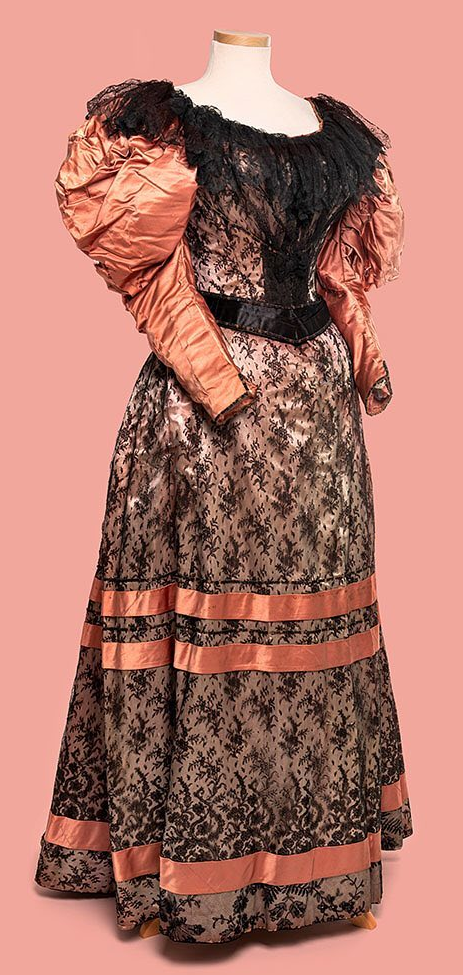 eep rose pink and black silk lace dress with full gigot (leg-of-mutton) sleeves was created for the trousseau of Miss Sara C. Simonds in January 1890.
The label in the featured image was found on this dress, a key signifier of her growing acclaim in Charleston. The fact she used a label, typically used in couture garments, on her garments to identify her business illustrated her success.
Pauline took on a number of activist positions as well as maintaining a presence in the dressmaking community. From 1914-1916 she was the President of the Union Millinery & Notion Company, where she accepted young African American women as apprentices and helped to further the millinery and dressmaking trade through the company and her influence in Charleston.
Madame Seba was also an advocate for women’s education and rights, she was a founding member of Charleston’s Phillis Wheatley Literary and Social Club founded to “promote interest in literary and community work and to lift others as they climb to higher heights.”
On June 14, 1919, Seba was featured in Woman’s Wear Daily for her dressmaking skills and her high speciality shop at 419 King St in Charleston, serving African American clientele.
Pauline not only created beautiful garments in a shop that served her community but also used her place and prominence to pursue racial justice. She continued to fight for equality and women’s education up until her death in 1931.
images from the Charleston Museum
 The Errant Modiste